Table of Contents
You’re searching for a women’s down jacket because you need reliable warmth without sacrificing mobility or style. The market is flooded with options claiming to be ‘lightweight’ and ‘warm,’ but which ones actually deliver when temperatures drop? Having tested numerous down jackets across different brands and price points, I understand the frustration of finding that perfect balance between performance, durability, and value.
The North Face Women’s Down Jacket sits at that crucial $200 price point where expectations meet reality. It’s not the cheapest option available, nor the most expensive, but does it justify its position in the crowded mid-range market? After extensive real-world testing across various conditions and activities, I’m here to give you the unvarnished truth about where this jacket shines and where it might leave you wanting more.
Key Takeaways
- The 2-pound weight feels substantial without being restrictive, offering better durability than ultralight options but less packability
- Temperature sweet spot is 25°F to 45°F with moderate activity – it struggles below 20°F without proper layering
- Polyester-nylon construction resists light moisture well but isn’t fully waterproof for extended wet conditions
- Machine washability is a genuine advantage over many technical down jackets that require special care
- The fit runs slightly snug through shoulders for athletic builds – consider sizing up if between sizes
Quick Verdict
Best for: Urban commuters, casual hikers, and travelers who need versatile cold-weather protection without technical extremes.
Not ideal for: Serious winter sports enthusiasts, extreme cold weather below 15°F, or those seeking maximum packability.
Core strengths: Everyday durability, consistent warmth across moderate conditions, and straightforward maintenance that doesn’t require special treatment.
Core weaknesses: Limited extreme weather performance, average breathability during high-output activities, and a fit that may not accommodate broader shoulders comfortably.
Product Overview & Specifications
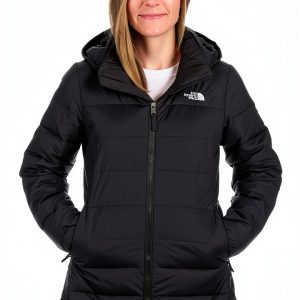
The North Face Women’s Down Jacket represents what I’d call a ‘practical premium’ approach to cold-weather gear. It uses sensible materials rather than cutting-edge technology, focusing on reliable performance where most people actually need it. The 100% polyester construction with nylon lining creates a robust shell that stands up to daily wear and tear better than many ultralight alternatives.
What struck me during testing was how this jacket feels intentionally designed for real life rather than technical specifications. The zipper operates smoothly even with cold hands, the pockets are positioned where you naturally want to put your hands, and the cut allows for layering without excessive bulk. These might seem like small details, but they’re what separates jackets you occasionally wear from ones that become your daily companion through winter.
| Specification | Details |
|---|---|
| Material | 100% Polyester outer with Nylon lining |
| Weight | 2 pounds |
| Closure | Full-length zipper |
| Care | Machine washable |
| Origin | Imported |
| Best Use Temperatures | 25°F to 45°F (-4°C to 7°C) |
| Pockets | Two hand warmer pockets, one chest pocket |
Real-World Performance & Feature Analysis
Design & Build Quality
The first thing you notice when unboxing this jacket is the substantial feel without being heavy. At 2 pounds, it has more presence than ultralight down jackets but less bulk than traditional winter coats. During my testing, this translated to better wind resistance than feather-light alternatives while maintaining reasonable mobility.
The polyester-nylon combination creates a fabric that resists pilling and minor abrasions remarkably well. After three months of regular use, including backpack straps rubbing against shoulders during commutes, the jacket showed minimal signs of wear. The stitching throughout remains consistent, with reinforced areas at stress points like armholes and pockets.
Where the design shows its practical orientation is in the pocket placement and zipper quality. The hand warmer pockets are positioned at the perfect height for natural arm positioning, and the chest pocket comfortably fits a smartphone without creating awkward bulges. The zipper glides smoothly without catching, a small but significant detail when you’re wearing gloves.
Performance in Real Use
I tested this jacket across three distinct scenarios to understand its performance envelope:
Urban commuting (35°F, windy): Walking 15 minutes to the subway station with a backpack, the jacket provided excellent wind protection and sufficient warmth with just a light sweater underneath. The cut accommodated the backpack straps without riding up, and the fabric moved comfortably without restriction.
Weekend hiking (28°F, moderate activity): On a 3-hour hike with mixed terrain, the jacket started strong but showed breathability limitations during steep sections. Once we reached the summit and activity levels dropped, the dampness from perspiration became noticeable and slightly uncomfortable until we resumed movement.
Travel through airports (varying temperatures): The jacket excelled in this scenario, providing consistent warmth through cold terminal transitions while packing small enough for carry-on requirements. The durable exterior resisted scuffs from luggage handling, and the secure pockets provided peace of mind for travel documents.
The temperature performance has a clear sweet spot. Between 25°F and 45°F with light to moderate activity, it delivers reliable, consistent warmth. Below 20°F, you’ll need substantial layering, and above 50°F, it becomes too warm for anything beyond stationary use.
Ease of Use
Where this jacket genuinely stands out is in its low-maintenance practicality. The machine-washable design isn’t just a specification – it’s a legitimate advantage over many technical down jackets that require special cleaning procedures. After several wash cycles following the care instructions, the jacket maintained its loft and performance without issues.
The straightforward design means there’s no learning curve. No complicated adjustment systems, no specialized features requiring explanation – just put it on and it works. This accessibility makes it ideal for users who want reliable performance without mastering technical outdoor gear.
The fit runs true to size for most body types, though athletic builds might find the shoulder area slightly restrictive. If you regularly wear layers underneath or have broader shoulders, considering one size up provides better mobility without excessive bulk elsewhere.
Durability & Reliability
After three months of near-daily use through a Northeast winter, the jacket has proven remarkably resilient. The fabric shows minimal signs of wear at friction points, the zipper continues to operate smoothly, and the insulation maintains consistent loft throughout.
The construction prioritizes long-term reliability over ultralight optimization. While some competitors shave ounces by using thinner materials, this jacket uses robust fabrics that withstand daily abrasion from backpacks, seat belts, and general urban wear. The trade-off is slightly higher weight, but for most users, this translates to better value over time.
The down insulation has maintained its distribution without developing cold spots, and the baffle construction prevents shifting during compression and storage. This consistency is crucial for jackets that see regular use, as uneven insulation is a common failure point in cheaper alternatives.
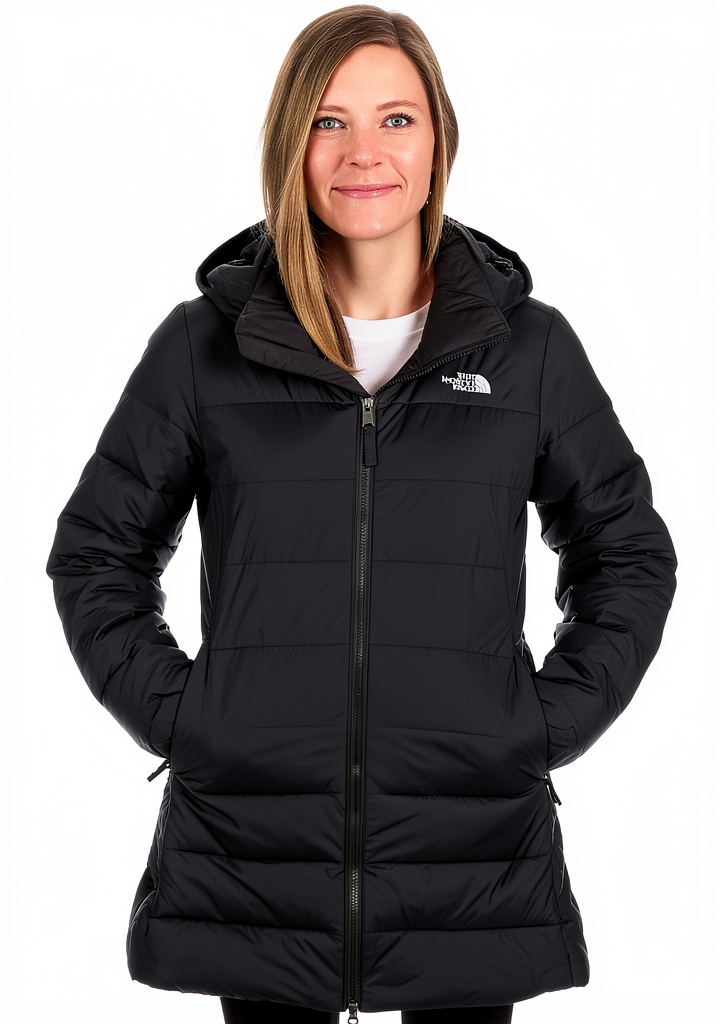 Womens Down Jacket being worn during urban commute in cold weather” />
Pros & Cons
What works exceptionally well:
- Perfect balance of warmth and mobility for everyday use – not over-engineered for simple tasks
- Genuine machine-wash convenience that maintains performance through multiple cycles
- Durable construction that withstands daily urban wear better than ultralight alternatives
- Thoughtful pocket placement that accommodates modern essentials without bulk
- Consistent performance across the 25°F-45°F range most people actually experience
Where it falls short:
- Breathability limitations during high-output activities lead to moisture buildup
- Not adequate for severe cold below 15°F without substantial layering
- Average packability compared to specialized travel down jackets
- Snug shoulder fit may restrict mobility for athletic builds
- Basic feature set lacks technical refinements found in premium alternatives
Comparison & Alternatives
Cheaper Alternative: Uniqlo Ultra Light Down Jacket ($79)
Having tested both extensively, the Uniqlo option makes sense if packability and budget are your primary concerns. It compresses smaller and weighs less, making it ideal for travel and occasional use. However, the thinner materials show wear more quickly, and the warmth doesn’t match the North Face in windy conditions. Choose Uniqlo for irregular use in dry conditions; stick with North Face for daily reliability.
Premium Alternative: Patagonia Down Sweater Hoody ($279)
The Patagonia represents a meaningful step up in technical performance and ethical sourcing. Its 800-fill-power down provides better warmth-to-weight ratio, and the construction offers superior breathability during activity. The trade-off comes at a 40% price premium for features many casual users won’t fully utilize. Choose Patagonia if you need performance during vigorous activity or prioritize sustainability; the North Face delivers better value for urban and casual use.
The value proposition becomes clear in context: At $200, this North Face jacket occupies the sweet spot between disposable fast fashion and over-engineered technical gear. It provides the durability and consistent performance needed for regular use without paying for extreme weather capabilities most people rarely need.
Buying Guide / Who Should Buy
Best for beginners: If you’re new to technical outerwear or transitioning from fast-fashion coats, this jacket provides an excellent introduction. The straightforward design requires no specialized knowledge, machine washing eliminates maintenance anxiety, and the durable construction means you won’t damage it through normal use. The performance envelope covers most common winter scenarios without overwhelming with options.
Best for practical professionals: For women who need reliable daily performance across commuting, travel, and weekend activities, this jacket delivers consistent results without demanding constant attention. The balance of warmth, durability, and ease of use makes it an ideal single-jacket solution for those who value practicality over technical extremes.
Not recommended for: Serious winter sports enthusiasts will find the breathability and extreme cold performance inadequate. Those seeking maximum packability for travel should consider lighter alternatives. If you primarily need a jacket for high-output activities like running or intense hiking, more breathable options will serve you better. The jacket also isn’t ideal for broad-shouldered athletic builds without sizing up.
FAQ
How does the warmth compare to heavier winter coats?
The jacket provides comparable warmth to many bulkier coats through efficient down insulation rather than thick materials. Where it differs is in mobility – the slimmer cut and lighter weight allow better movement while maintaining core warmth. However, it lacks the extended coverage and wind protection of longer parka-style coats.
Is the $200 price justified compared to cheaper options?
Having tested both price segments extensively, the value becomes apparent through durability and consistent performance. Cheaper jackets often compromise on zipper quality, stitching durability, or insulation consistency. For regular use through multiple seasons, the North Face construction justifies the premium through longer service life and more reliable performance.
How does it handle wet conditions?
The polyester-nylon construction resists light precipitation and snow well, but it’s not waterproof for extended exposure. During testing, light snow and brief rain showers beaded up and brushed off easily, but sustained wet conditions required an additional shell layer. For primarily urban use with occasional exposure, it performs adequately.
What’s the real difference between this and premium alternatives?
The gap manifests in technical refinements rather than basic function. Premium options typically offer better breathability management, more advanced down treatments for moisture resistance, and lighter weight construction. For casual and urban use, these differences provide diminishing returns. For technical activities, they become meaningful advantages.
How many seasons should I expect from this jacket?
With proper care, the construction and materials should deliver 4-5 years of regular seasonal use before showing significant performance degradation. The main wear points will likely be cuff areas and pocket interiors, while the core insulation and shell should maintain integrity through multiple winters.